
Get Blood Pressure Testing in Gwinnett County & Atlanta Metro
Know Your Numbers, Protect Your Heart
High blood pressure is one of the leading risk factors for heart attack, stroke, and other heart conditions. A blood pressure test is one of the simplest, most powerful steps you can take to understand your cardiovascular health and stay ahead of potential problems.
At Cardiovascular Group, we offer more than a standard in-office reading. Our cardiologists provide comprehensive blood pressure testing, including in-office measurement and ambulatory 24-hour monitoring, to give you and your doctor an accurate, complete picture of your blood pressure throughout your day-to-day life. If your results indicate elevated or high blood pressure, our team is ready to work with you on a personalized hypertension management plan right here at CVG.
With 11 cardiology offices across Gwinnett County and the Atlanta metro, board-certified cardiovascular care is always close to home.
Why Blood Pressure Testing Matters for Your Heart Health
Your heart works tirelessly daily to keep you alive and well, but taking its health for granted is easy. Blood pressure is one of heart health’s most crucial yet often overlooked aspects. High blood pressure, or hypertension, is usually called the “silent killer” because it typically has no symptoms. It can quietly damage your arteries and strain your heart, even though you may feel fine.
Regular blood pressure checks are a simple, painless way to maintain good cardiovascular health. They are quick tests that can provide valuable information about overall well-being. By monitoring your blood pressure, you can catch potential issues early and take steps to address them before they become more serious.
By visiting CVG for blood pressure testing, you’re taking a proactive step toward protecting your long-term cardiovascular health. With 11 locations across Gwinnett County and the Atlanta metro, it’s easy to find a CVG cardiologist near you. Our team will not only check your blood pressure but also interpret your results in the context of your overall cardiovascular health and, if needed, connect you with CVG’s hypertension management program for ongoing monitoring and care.
Remember, knowledge is power when it comes to your health. A simple blood pressure test could prevent future complications and ensure your heart stays strong for years.
Who Needs a Blood Pressure Test?
Blood pressure testing is recommended for virtually all adults, but it’s especially important if you fall into any of the following categories:
- You are 40 or older, or over 18 with known cardiovascular risk factors
- You have a family history of high blood pressure, heart disease, or stroke
- You have been told your blood pressure was elevated at a previous appointment
- You are experiencing headaches, dizziness, shortness of breath, or chest discomfort
- You have diabetes, kidney disease, or are overweight
- You are pregnant or planning to become pregnant
- You are starting a new medication that may affect your blood pressure
- You have not had your blood pressure checked in more than two years
Even if you feel completely well, high blood pressure rarely causes noticeable symptoms, which is exactly why regular testing matters. A single reading at your nearest CVG cardiology office in Gwinnett County or the Atlanta metro can tell you whether your blood pressure is in a healthy range or whether it’s time to take action.

Types of Blood Pressure Testing at CVG in Gwinnett County
CVG offers two primary approaches to blood pressure testing, which your cardiologist will select based on your symptoms, medical history, and cardiovascular risk profile.
In-Office Blood Pressure Measurement
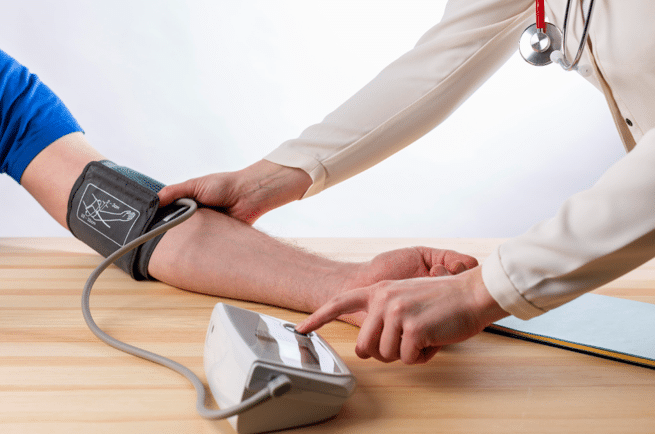
An in-office blood pressure test is quick, painless, and available at every CVG location. Using a blood pressure cuff placed around your upper arm, your cardiologist or care team will measure both your systolic pressure (the pressure during a heartbeat) and your diastolic pressure (the pressure between beats). Results are available immediately and reviewed in the context of your full cardiovascular health picture.
In-office testing is appropriate for routine cardiovascular checkups, initial screenings, and follow-up monitoring for patients already being treated for hypertension.
Ambulatory Blood Pressure Monitoring (24-Hour Monitoring)
A single in-office reading captures your blood pressure at a single moment in time. Ambulatory blood pressure monitoring (ABPM) goes much further, recording your blood pressure automatically at regular intervals throughout a full 24-hour period, including while you sleep.
This is particularly valuable for patients who experience white coat hypertension (blood pressure that rises in a clinical setting but is normal at home), masked hypertension (blood pressure that appears normal in-office but is elevated during daily life), or whose readings vary significantly from visit to visit.
Your cardiologist will fit you with a small, lightweight monitor that you wear at home for 24 hours. The device automatically records readings, and you simply go about your daily activities. You’ll return the monitor to your nearest CVG cardiology center the following day, and your cardiologist will review the results with you.
How to Prepare for Your Blood Pressure Test
There are a couple of things you can do before getting screened to help achieve the most accurate blood pressure reading. These include avoiding tobacco smoke, exercise, and caffeine at least 30 minutes to an hour before your test, as these factors can increase your blood pressure and heart rate. It can also help to wear a short-sleeved shirt so the blood pressure cuff can be placed more easily around your arm.
How Blood Pressure Testing Works at CVG
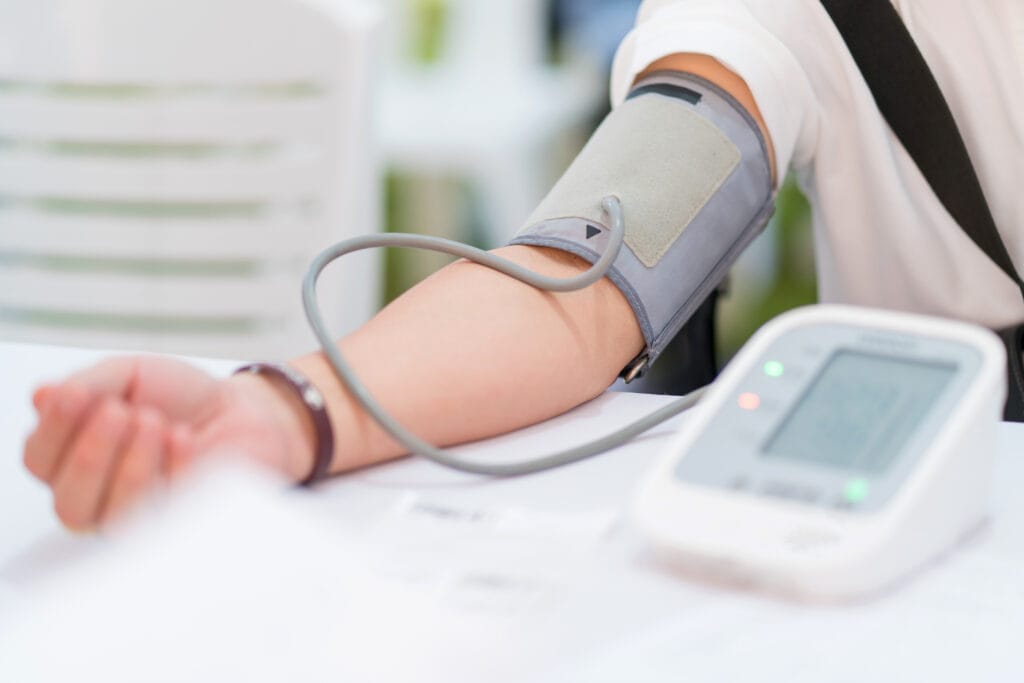
For your blood pressure test, you will be asked to sit in a chair with your feet placed flat on the ground. Your arm will be placed on a table or other elevated surface so that it rests at heart level. The blood pressure cuff will be placed around the top part of your arm, with the bottom of the cuff lying just above your elbow. It’s important that the cuff fits well, as readings can be inaccurate if it’s too big or too small.
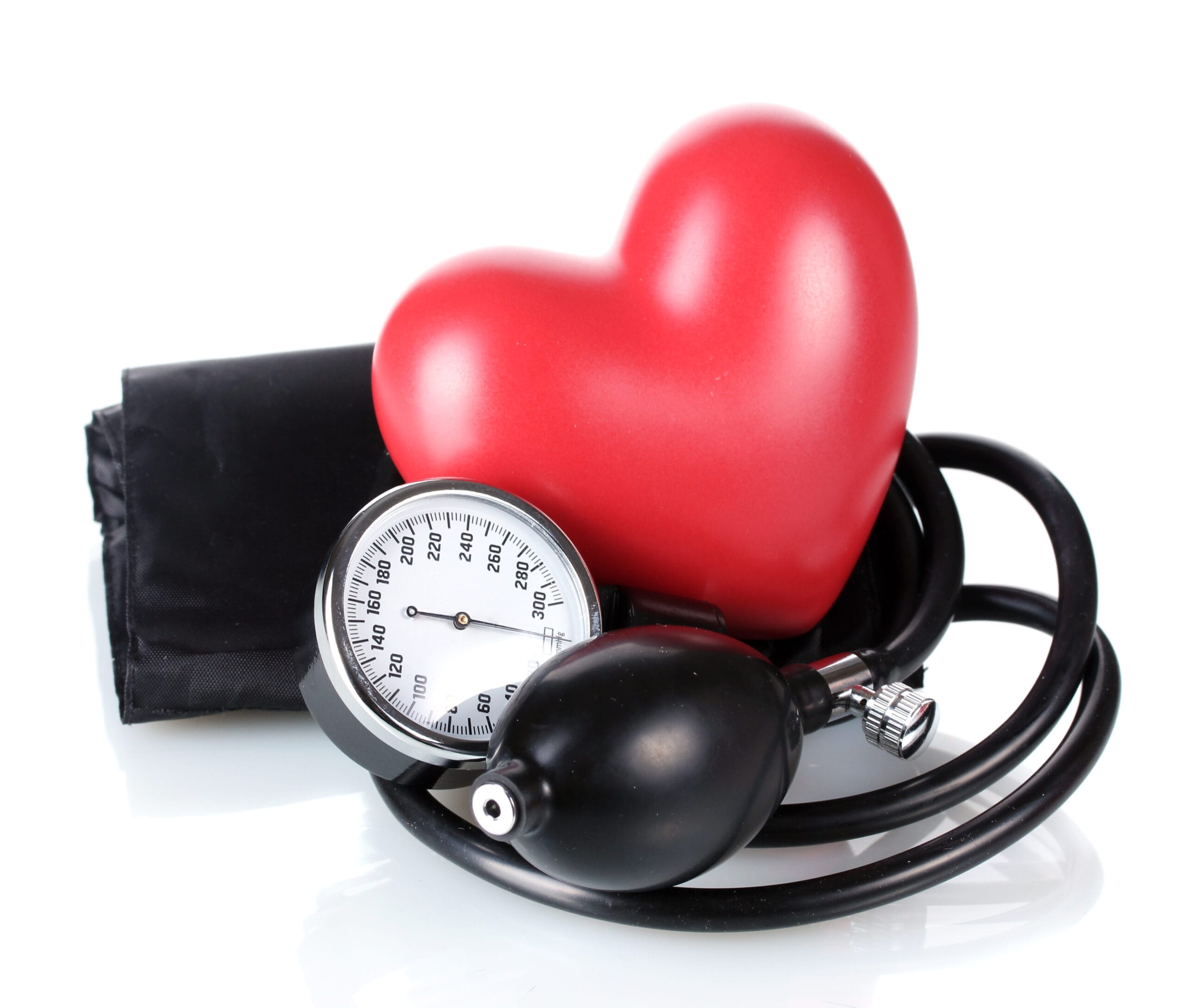
Once the cuff is placed on your arm, your doctor will take either an automated or manual blood pressure reading. For a manual measurement, your doctor will place a stethoscope over the major artery in your upper arm to listen to blood flow. The cuff is then inflated with a small pump, which squeezes the arm as it inflates. Blood flow through the artery is temporarily disrupted due to this inflation.
Your doctor will then slowly release the air in the cuff to restore blood flow, listening to your blood flow and pulse and measuring your blood pressure as this happens. For an automated measurement, the blood pressure cuff automatically inflates and measures your pulse. In this case, a stethoscope is not needed. It takes about 1 minute to get a blood pressure measurement.

Understanding Your Blood Pressure Results
Blood pressure is divided into four different categories. If the systolic pressure is below 120 and the diastolic pressure is below 80, you have normal blood pressure. In this case, all you must do is maintain a healthy lifestyle. If the systolic number is between 120 and -129 and the diastolic number is below 80, this means you have elevated blood pressure. You should adopt a healthy lifestyle to lower your blood pressure.
If the systolic number is between 130-139 or the diastolic number is between 80-89, this means you have Stage 1 high blood pressure, and you should talk to your doctor about receiving medication. If your systolic blood pressure is 140 or higher or your diastolic blood pressure is 90 or higher, you have Stage 2 high blood pressure, and you should adopt a healthy lifestyle and take
one or more medications. Stage 1 and 2 high blood pressure means you are at an increased risk of developing heart disease.
Frequently Asked Questions About Blood Pressure Testing in Georgia
A normal blood pressure reading is below 120/80 mmHg. Readings between 120–129 systolic with a diastolic below 80 are considered elevated. Stage 1 hypertension is 130–139/80–89 mmHg, and Stage 2 hypertension is 140/90 mmHg or higher. Your CVG cardiologist will review your specific reading and what it means for your individual health.
Adults 18 and older with normal blood pressure and no cardiovascular risk factors should be tested every 2 to 5 years. Adults 40 and older, or those with elevated risk factors such as diabetes, obesity, or a family history of heart disease, should be tested annually. Patients already being treated for hypertension may need more frequent monitoring; your CVG cardiologist in Gwinnett County will advise you on the right schedule.
Yes, home blood pressure monitoring with a validated digital cuff can be a useful supplement to in-office testing. Your CVG cardiologist may recommend keeping a log of home readings if your blood pressure varies significantly between visits. However, home monitoring should complement, not replace, regular testing with your cardiologist at one of CVG’s Gwinnett County or Atlanta metro cardiology centers.
Ambulatory blood pressure monitoring (ABPM) involves wearing a small, automatic blood pressure monitor for 24 hours to capture readings throughout your normal daily activities and while you sleep. It provides a much more complete picture of your blood pressure patterns than a single in-office reading and is particularly useful for diagnosing white coat hypertension or masked hypertension. CVG offers ambulatory blood pressure monitoring across all Gwinnett County and Atlanta metro locations.
For the most accurate reading, avoid caffeine, tobacco, and vigorous exercise for at least 30 minutes before your test. Wear a short-sleeved shirt so the blood pressure cuff can be placed easily, and try to sit quietly for a few minutes before your measurement. Your CVG care team will guide you through the process.
Why Choose CVG for Blood Pressure Testing & Hypertension Care in Gwinnett County
CVG’s cardiologists don’t just take your blood pressure; they use your results as the starting point for a comprehensive cardiovascular health assessment. CVG is a multi-year Best of Gwinnett award winner and a Northside Hospital-affiliated practice, trusted by patients across Gwinnett County and the Atlanta metro for over 40 years. If your reading is elevated, our team can order additional diagnostic testing, prescribe or adjust medications, and enroll you in CVG’s hypertension management program for ongoing monitoring and support.
With 11 cardiology locations across Gwinnett County and the Atlanta metro, board-certified cardiologists at every office, and in-office testing available without referral for most patients, CVG makes it easy to take control of your blood pressure and your heart health.
Find a CVG Cardiologist for Blood Pressure Testing Near You
CVG’s board-certified cardiologists are ready to help you understand your blood pressure and take the next step toward better cardiovascular health. With 11 cardiology offices across Gwinnett County and the Atlanta metro, expert hypertension care is always close to home.
Lawrenceville (Main Office)
2200 Medical Center Blvd, Suite 400
Lawrenceville, GA 30046
770.962.0399 | 770.290.8084
Dacula
2108 Teron Trace, Suite 100,
Dacula, GA 30019
770.962.0399 | 770.290.8084
Grayson
1132 Athens Highway, Suite 207,
Grayson, GA 30017
770.962.0399 | 770.290.8084