
Electrical Cardioversion in Gwinnett County & Atlanta Metro
A safe, controlled procedure to restore normal heart rhythm, performed by CVG’s board-certified cardiologists across 11 Gwinnett County and Atlanta metro locations.
Electrical cardioversion is a safe, non-surgical procedure that uses a brief, precisely controlled electrical shock to restore a normal heart rhythm in patients with atrial fibrillation (AFib) or atrial flutter. The procedure itself takes approximately five minutes, and most patients are discharged the same day.
At CVG, electrical cardioversion is performed by our board-certified cardiologists in a fully monitored clinical setting across 11 locations in Gwinnett County and the Atlanta metro.
What Is Electrical Cardioversion?
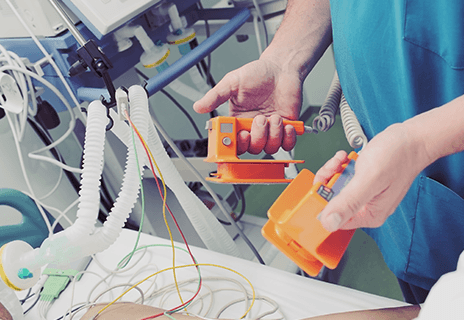
Electrical cardioversion works by delivering a precisely timed, synchronized electrical shock to the heart, timed to the heartbeat, to safely interrupt the chaotic electrical signals causing the irregular rhythm and allow the heart’s natural pacemaker to resume control and restore a normal sinus rhythm.
It is important to note that electrical cardioversion is different from emergency defibrillation, which is used during life-threatening cardiac arrest and delivers an unsynchronized shock. Electrical cardioversion is an elective, planned procedure performed under sedation in a controlled clinical setting; it is not an emergency intervention.
Electrical cardioversion does not address the underlying cause of the arrhythmia. For many patients, AFib or atrial flutter returns over time after cardioversion. Your CVG cardiologist will discuss whether additional treatment, such as ongoing medication or catheter ablation, is recommended alongside or after cardioversion to maintain long-term rhythm control.
Who Needs Electrical Cardioversion?
Electrical cardioversion is recommended for patients with atrial fibrillation or atrial flutter whose irregular heart rhythm has not responded adequately to medication, or whose arrhythmia needs to be reset to allow the heart to function and pump blood more effectively.
Your CVG cardiologist may recommend electrical cardioversion if you:
- Have been diagnosed with atrial fibrillation or atrial flutter that has persisted despite medication
- Are experiencing significant symptoms, such as shortness of breath, fatigue, palpitations, or reduced exercise tolerance, related to your irregular rhythm
- Have recently developed AFib or atrial flutter and your cardiologist wants to restore normal rhythm promptly
- Are preparing for catheter ablation and need rhythm control beforehand
- Have had cardioversion before and experienced a return of symptoms over time, cardioversion can be safely repeated
Electrical cardioversion is not appropriate for all patients with AFib or atrial flutter. Your CVG cardiologist will evaluate your overall health, the duration of your arrhythmia, your stroke risk, and whether pre-procedure blood thinning is needed before recommending this procedure.

How Electrical Cardioversion Works - Before, During, and After
Before the Procedure. In the days or weeks before your cardioversion, your CVG cardiologist will likely prescribe blood-thinning medication to reduce the risk of clot formation in the heart’s chambers. Depending on your individual situation, you may also undergo a transesophageal echocardiogram (TEE), a detailed imaging test that allows your cardiologist to confirm no blood clots are present in the heart before proceeding.
You will be asked to fast for several hours before the procedure. Your CVG care team will provide specific pre-procedure instructions including which medications to take or pause on the day of your appointment.
During the Procedure. Electrical cardioversion is performed in a monitored clinical setting at CVG. You will be given a short-acting sedative through an IV so you are comfortably asleep during the procedure; you will not feel the electrical shock and will not remember it afterward.
Once sedated, your cardiologist places specialized adhesive pads on the front and back of your chest. A precisely timed, synchronized electrical shock is then delivered through the pads, synchronized with your heartbeat, to safely reset the heart’s electrical system and restore a normal sinus rhythm. The shock itself lasts only a fraction of a second. The entire procedure takes approximately five minutes.
After the Procedure. You will be monitored in a recovery area for approximately 45 minutes to an hour as the sedative wears off. Most patients feel back to normal quickly and are discharged the same day. You will need someone to drive you home as the sedative will temporarily affect your ability to drive.
Your CVG cardiologist will review your heart rhythm before discharge and discuss next steps, which may include ongoing medication to maintain normal rhythm, or further evaluation for catheter ablation if cardioversion alone is unlikely to provide long-term rhythm control.
Electrical Cardioversion vs. Catheter Ablation
Electrical cardioversion and catheter ablation are both used to treat atrial fibrillation and atrial flutter, but they work differently and serve different purposes in a patient’s care journey.
Electrical cardioversion restores normal rhythm quickly and non-surgically, but it does not address the underlying electrical cause of the arrhythmia. For many patients, AFib or flutter returns over time, requiring repeat cardioversion or additional treatment. It is most effective as a short-term rhythm reset or as a bridge while longer-term treatment is being planned.
Catheter ablation targets and eliminates the abnormal electrical pathways causing the arrhythmia, offering the potential for lasting rhythm control. It is a more involved procedure but may reduce or eliminate the need for ongoing medication and repeat cardioversions.
Your CVG cardiologist will discuss which approach, or combination of approaches, is most appropriate for your specific type of arrhythmia, how long it has been present, and your overall health and treatment goals.
Frequently Asked Questions
The procedure is typically recommended by your CVG cardiologist as part of your arrhythmia management plan. If you have been referred by an outside physician or would like to discuss whether cardioversion is appropriate for your symptoms, contact your nearest CVG location to schedule a consultation.
Why Choose CVG for Electrical Cardioversion
Our board-certified cardiac specialists perform electrical cardioversion in a fully monitored clinical setting, with individualized pre-procedure planning and same-day discharge for most patients.
With 11 locations across Gwinnett County and the Atlanta metro and a track record of caring for Georgia patients since 1982, accessible expert arrhythmia care is always within reach.