
Coronary Calcium Scan - Know Your Heart Disease Risk Before Symptoms Appear
A quick, non-invasive CAC scan ordered by CVG’s board-certified cardiologists to measure calcium buildup in your coronary arteries and assess your long-term cardiovascular risk.
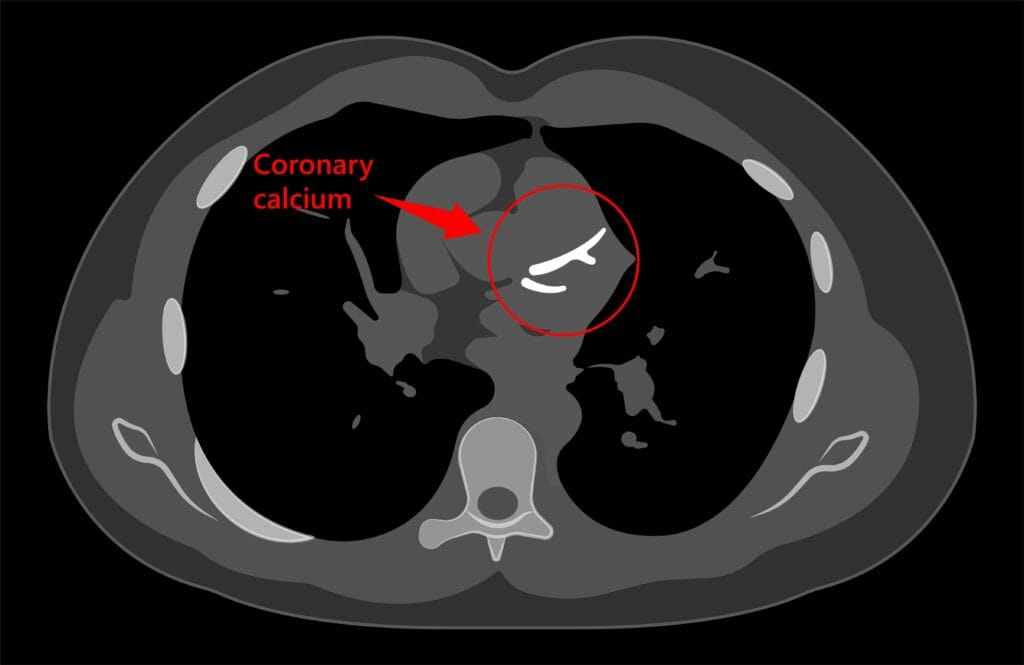
A coronary calcium scan, also called a CAC scan or coronary artery calcium scan, is a specialized, low-radiation CT scan that detects and measures calcium deposits in the walls of your coronary arteries. These deposits are a marker of atherosclerotic plaque, and the amount of calcium present directly correlates with your risk of developing coronary artery disease, a heart attack, or other serious cardiovascular conditions, even if you feel completely healthy right now.
At CVG, coronary calcium scanning is used as a preventive screening tool for patients at intermediate cardiovascular risk, giving our board-certified cardiologists the information needed to intervene early, before symptoms develop. Getting this scan is like looking into your heart’s future. If your results show calcium buildup, CVG’s team can help you develop a personalized plan to reduce your risk and protect your long-term heart health.
What Is a Coronary Calcium Scan?
In the early stages, arterial plaque is soft and waxy. Over time, it can harden and calcify, narrowing the artery, slowing blood flow, and increasing the risk that a piece of plaque breaks off and causes a blood clot or heart attack. A coronary calcium scan identifies this calcification early, before it causes symptoms or a cardiac event, giving you and your CVG cardiologist the opportunity to intervene.

Who Should Get a Coronary Calcium Scan?
A coronary calcium scan is most beneficial for adults at intermediate cardiovascular risk, those for whom standard risk calculators leave some uncertainty about the need for medication or more aggressive lifestyle intervention. CVG’s cardiologists typically consider this scan for patients who:
Are considering starting or stopping statin therapy and want more precise risk information
For patients with very low cardiovascular risk, the scan is unlikely to show significant calcium. For patients already diagnosed with advanced coronary artery disease, it may not add new information. The scan is most powerful in the middle ground, which is exactly where it can change the course of a patient’s care.
How the Coronary Calcium Scan Works
Before your visit, your CVG cardiologist may ask you to avoid caffeine and smoking for at least 4 hours before the scan. When you arrive at your CVG location, you will be asked to remove clothing and jewelry above the waist and change into a gown.
A technician will then attach sensors called electrodes to your chest.
These connect to an EKG machine, which records the electrical activity of your heart during the exam and coordinates the timing of the X-ray pictures so they are taken in between heartbeats, when the heart muscles are relaxed. During the scan, you will lie back on a table that slides into the CT scanner, which is similar to a hollow tube, and your head will be outside of the scanner at all times.
You may receive medication before the exam to help keep you calm and slow your heart rate, so the results will be more accurate. The exam typically takes only 10 to 15 minutes, and once it is completed, you can resume your regular routine.
Understanding Your Coronary Calcium Score (Agatston Score)

Your coronary calcium scan result is expressed as an Agatston score, a number calculated from the density and volume of calcium detected in your coronary arteries.
Score of 0 – No calcium detected. This is the most favorable result and indicates a very low risk of heart attack in the near term. Your CVG cardiologist may recommend lifestyle maintenance and repeat screening in five years.
Score of 1–99 – Mild calcium deposits present. Some plaque buildup is present, but the risk is still considered relatively low. Your cardiologist will discuss whether lifestyle changes or medication are appropriate.
Score of 100–300 – Moderate plaque deposits. This score suggests a meaningfully elevated risk of developing coronary artery disease or experiencing a cardiac event in the next few years. Your CVG physician will work with you on a targeted prevention plan.
Score above 300 – Extensive calcification. This score indicates a high risk of heart disease and heart attack. Aggressive lifestyle changes, medication management, and potentially additional testing will be recommended.
From CAC Score to Action - What Happens After Your Scan
A coronary calcium scan result is the beginning of a conversation, not the end of one. At CVG, once your Agatston score is reviewed, your cardiologist will meet with you to discuss what it means for your individual cardiovascular risk and what next steps are most appropriate.
Depending on your score and overall health profile, your CVG cardiologist may recommend:
Lifestyle Modification Guidance: For patients with early or moderate calcium scores, targeted lifestyle changes, including dietary improvements, increased physical activity, smoking cessation, and stress management, can meaningfully slow plaque progression and reduce cardiovascular risk over time.
Medication Management: Patients with elevated CAC scores may benefit from statin therapy to lower LDL cholesterol, blood pressure medication, or aspirin therapy depending on their overall risk profile. CVG’s cardiologists will review your current medications and make evidence-based recommendations.
Additional Cardiac Testing: A high CAC score may prompt further evaluation, such as a stress test, echocardiogram, or coronary CT angiogram, to assess whether significant blockages are already present. Your CVG cardiologist will determine whether additional testing is warranted based on your score and symptoms.
Ongoing Monitoring: For patients with intermediate scores, repeat coronary calcium scanning in three to five years may be recommended to track progression and adjust your prevention strategy accordingly.
Frequently Asked Questions About Coronary Calcium Scanning
The scan itself takes approximately 10 to 15 minutes. There is no recovery time; you can resume your normal activities immediately afterward. Your CVG cardiologist will review the results with you at a follow-up appointment.
No, a standard coronary calcium scan does not require injected contrast dye or any needles. It is a non-invasive scan that uses only low-dose CT X-ray technology.
No, these are two different tests. A coronary calcium scan measures calcium deposits in artery walls to assess cardiovascular risk. A coronary CT angiogram (CCTA) uses contrast dye to visualize the coronary arteries and detect blockages. Your CVG cardiologist will recommend the appropriate test based on your symptoms and risk profile.
A score of zero is the most favorable result, indicating no detectable calcium and a very low near-term risk of heart attack. Any score above zero indicates some degree of plaque buildup. Scores of 100–300 indicate moderate risk, and scores above 300 indicate high risk. Your CVG cardiologist will explain what your specific score means for your individual care plan.
Why Choose CVG
A coronary calcium scan is most powerful when it’s interpreted in the context of your full cardiovascular health picture, not just as a standalone number. At CVG, your scan results are reviewed by a board-certified cardiologist who knows your medical history, understands your risk factors, and can translate your CAC score into a concrete, personalized prevention plan.
Whether your score comes back at zero or above 300, CVG’s team will explain exactly what it means for you and what steps, if any, are recommended next. With 11 locations across Gwinnett County and the Atlanta metro and a track record of preventive cardiac care since 1982, CVG makes it straightforward to take this important step for your long-term heart health.
Lawrenceville (Main Office)
Buford
Loganville
2200 Medical Center Blvd, Suite 400
Lawrenceville, GA 30046
770.962.0399 | 770.290.8084
2800 Buford Drive, Suite 320
Buford, GA 30519
770.962.0399 | 770.290.8084
98 Tara Commons
Loganville, GA 30052
770.962.0399 | 770.290.8084